The Best AP Environmental Science Books for 2027
Contents
Exam Info & Course Content
AP Environmental Science (APES) is about two hours and 40 minutes, split between multiple choice and free response. The free-response section is data- and math-heavy, so comfort with calculations and interpreting graphs is essential.
Next Exam Date
May 2027 — the College Board typically confirms the exact date the fall before, so check your subject page for the specifics.
Using These Books
The exam has been stable in recent years, so any current-edition book below will serve you well. We recommend the AP Environmental Science books here because they are aligned to the latest course framework and give you the most relevant, up-to-date practice for the May 2027 exam.
The Best AP Environmental Science Books for 2027
| Textbook / Review Book | Description | Our Rating | Price |
|---|---|---|---|
 | Environmental Science for the AP Course, 3rd Edition Andrew Friedland & Rick Relyea (Best Textbook) | 5.0 | View Price |
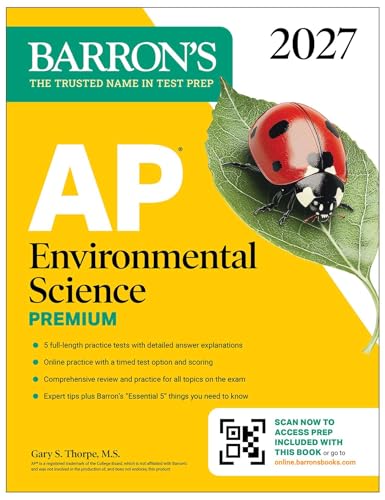 | Barron's AP Environmental Science Premium, 2027 Gary S. Thorpe, M.S. (Best Review Book) | 4.5 | View Price |
Best Textbook: Environmental Science for the AP Course, 3rd Edition
Friedland & Relyea is built from the ground up for APES, integrating exam prep into a genuine college-level text. Its coverage of environmental laws, case studies, and calculations maps directly onto what the exam tests.
The worked math examples are a lifesaver for the quantitative free-response questions.
Shop Now on AmazonBest Review Book: Barron's AP Environmental Science Premium, 2027
Barron's 2027 edition offers five full-length practice tests, chapters organized by the nine APES units, and online labs mapped to each chapter.
Thorpe's rundown of environmental laws and case studies is exactly the ammunition you need for strong free-response answers.
Shop Now on AmazonSelf-Study Tips
Self-studying for AP Environmental Science is very doable if you put in consistent work. Pick one book above as your main spine, read it actively, and take notes as you go.
Then shift into practice mode: work every practice test you can, review the questions you miss until you understand why the right answer is right, and simulate real timing before test day. That review-and-retry loop is what turns a 3 into a 5.
Other Study Materials
- College Board – the official course and exam page, with the current framework and free sample questions. Always start here to confirm exam format and dates.
- Free online practice – sites like Varsity Tutors and Albert.io offer additional practice questions to supplement your books.
- Get at least one physical book – even if you study mostly online, a real book you can mark up makes a real difference. Trust us on this.